
Planning is 90% of success. Or 10% planning saves 90% of execution. We hear quotes like this all the time, and for good reason. In my previous note, I made the same point: planning matters, especially compared to “shooting from the hip” project management.
But planning has a way of stealing the entire spotlight in the conversation about success. Whether it’s a website, a construction project, or producing a barrel of wine, the narrative is always the same: “The key to a successful business is planning.” That’s all we hear, and honestly, rightfully so.
However, the question I want to focus on, and the one often skipped past, is this: what happens next?
What comes after a business launches successfully? What happens to that pixel-perfect website after it goes live and starts attracting visitors? What turns that barrel of wine, planned so deliberately and delicately, into an award-winning wine come summer? And more importantly, how?
After digging through my thoughts for a long time, the answer finally showed up in one word. A word I’ve probably used thousands of times over the last 15+ years while selling web services to small businesses. Looking back, it’s almost funny, because the warning was always built into the word itself.
The answer is maintenance.
Ironically, this realization came while looking for an answer to something completely different. The rebellious introvert in me has been trying to figure out how to become an extrovert. Especially because I genuinely like people. I love socializing. And a wine-filled evening with friends and strangers is probably what I miss most from my life in Yerevan. But that’s a topic for another time.
The point is: maintenance keeps things alive.
Without maintaining, tending to, and nurturing a relationship, it fades and eventually dies. Same with a plant. Same with a human. Same with… basically everything worth keeping.
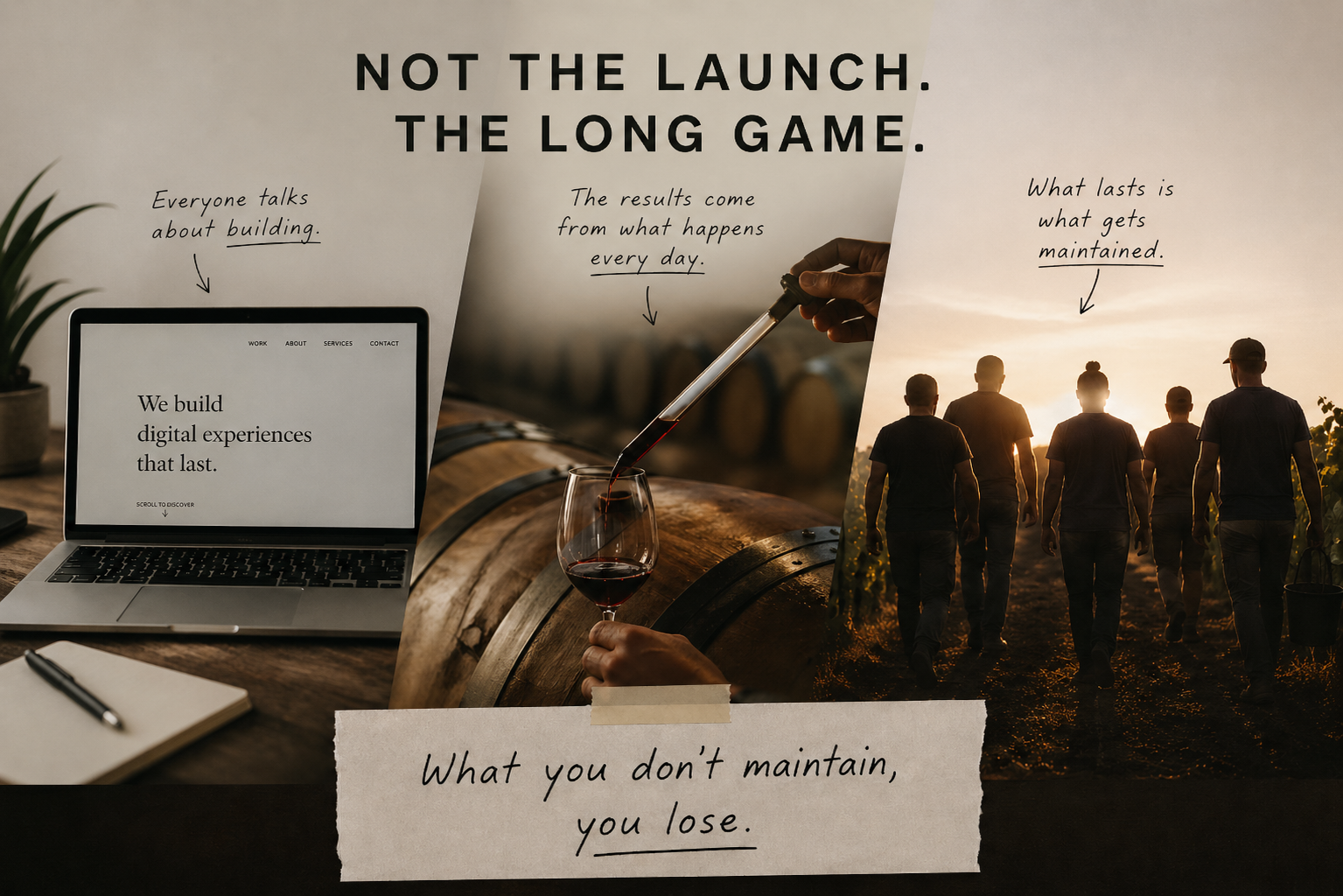
The same applies professionally. A website won’t stay current and strong on its own. Without regular maintenance, security updates, and refreshed content, it slowly fades until one day the business pulls the plug to save “unjustified” hosting costs.
Every project is like this.
And this is the part that rarely gets the spotlight. Not because it isn’t important, but because it isn’t exciting. It’s boring. It’s mundane. It’s routine.
Routine is unglamorous and also undefeated.
In relationships, maintenance looks like a text message. A call. A small gesture, like remembering a friend’s birthday. In business, maintenance looks different: it’s a continuous set of tasks done regularly. It’s routine.
That’s probably why people avoid talking about it. It’s not as exciting as starting a new project. It’s not as flashy as that rewarding moment after completion, when everyone celebrates and collects the rewards. It’s just… the unglamorous middle.
This also clicked immediately in my day-to-day winemaking practices. Regular check-ins. Following SOPs from harvest to aging to bottling. Every sip tasted, every barrel stirred, every analysis conducted, and every piece of data recorded. None of it is glamorous, but all of it contributes to the crowning outcome.
That outcome can show up in many forms: awards, scores, praise, a shiny medal, a fancy label on a shelf. But the most important “award” is always the same: the consumer accepting it, enjoying it, and choosing it again.
At the end of the day, those rewards are the fruit of the daily sweat and effort of everyone involved, from leadership all the way up to the people who turn out the lights at night.
P.S. Speaking of data, that’s another key factor in the quality of the end product, and I’ll make sure to write a note about that next.